
For many aquarium enthusiasts, the journey begins with a simple community tank. But for those who crave a deeper connection with their aquatic environment, the move toward Freshwater Stingrays represents the pinnacle of the hobby. Often viewed as “experts only” inhabitants, species like the Black Diamond or King Henlei are becoming increasingly accessible to dedicated keepers.
If you have the space and the passion, adding a stingray to your home is a transformative experience. Here is why these majestic river dwellers are arguably the most rewarding fish you will ever keep.
Unrivaled Personality and Intelligence
Unlike many fish that simply swim past the glass, stingrays are famously “owner-aware.” They are highly intelligent and capable of recognizing the person who feeds them.
Over time, we see these rays develop unique personalities. Some are bold and playful, gliding up the glass to greet you, while others are more calculated and observant. Many keepers even enjoy the thrill of hand-feeding their rays, a level of interaction that creates a genuine bond between the owner and the animal.
A Living Work of Art
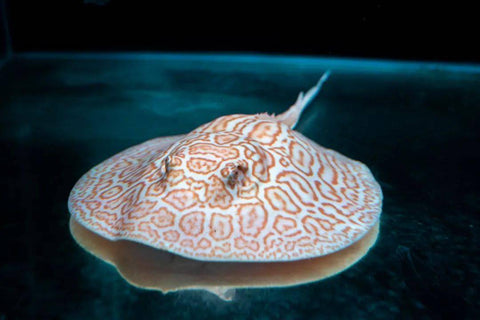
From a purely aesthetic standpoint, few creatures can compete with the visual impact of a stingray. Whether it is the obsidian-black disc of a Potamotrygon leopoldi covered in stark white “diamonds” or the ethereal, glowing rings of an Albino Pearl, they bring a high-end, luxury feel to any room.
Their movement is equally captivating. Watching a ray glide effortlessly across a sand substrate or “flutter” its edges to bury itself is a meditative experience. They provide a dynamic focal point that constantly changes as they grow and their patterns evolve.
The Challenge of Mastery for Fresh Water Stingray
There is a profound sense of pride that comes with successfully maintaining a stingray tank. Because they require pristine water conditions and specialized filtration, keeping rays forces you to become a better aquarist.
Mastering the nitrogen cycle and understanding the nuances of water chemistry for these sensitive species is a rewarding challenge. When you see your ray thriving, growing, and displaying vibrant colors, it serves as a testament to your skill and dedication to the craft of fishkeeping.
A Unique Glimpse into Ancient Evolution
Stingrays are cartilaginous fish, meaning their skeletons are made of cartilage rather than bone—just like sharks. By keeping a ray, you are essentially hosting a prehistoric relative of the ocean’s greatest predators in your living room.
This evolutionary history makes them fascinating subjects for study. From the way they use their electro-receptors to find food hidden in the sand to their unique method of “pumping” water through their spiracles, every day offers a new lesson in biology and natural history.
Understanding the growth stages of a Stingray (Potamotrygon leopoldi) is essential for providing the right environment at the right time. Because these rays grow relatively quickly in their first few years, your tank setup must evolve alongside them.
Pups (Newborn to 6 Months)
When Black Diamond Stingrays are born, they are referred to as pups. At birth, their disc diameter is typically between 4 to 6 inches. During this stage, they are most vulnerable and require the highest frequency of feeding—often 3 to 4 times a day.
Their “diamond” spots are usually present at birth but may appear smaller or less defined. We focus heavily on high-protein live foods during this window, such as blackworms, to kickstart their immune systems and ensure steady skeletal development.
Juveniles (6 Months to 18 Months)
The juvenile stage is the most explosive period of growth. You can expect the ray to reach a disc size of 8 to 12 inches during this time. This is the stage where the “Black Diamond” characteristics truly begin to pop; as the disc expands, the primary spots grow, and you will often see “eclipsing” or the development of secondary spotting.
As their mouth size increases, we transition them to larger frozen foods like mysis shrimp and small pieces of cut tilapia. This is also the critical time to ensure they are moved out of smaller “grow-out” tanks and into their long-term enclosures to prevent stunted growth.
Sub-Adults (1.5 Years to 3 Years)
During the sub-adult phase, the ray typically reaches 14 to 18 inches. While the physical growth in diameter begins to slow down compared to the juvenile stage, the fish begins to “bulk up” in thickness and weight.
Sexual dimorphism becomes very obvious at this stage. Males will have clearly visible claspers at the base of their tail, while females will generally be larger and wider. This is often the stage where hobbyists notice the most personality development, as the rays become highly interactive with their keepers.
Mature Adults (3 Years and Beyond)
A Black Diamond Stingray is considered a full adult once it reaches sexual maturity, usually around the 3-year mark. Females can eventually reach a disc diameter of 24 to 30 inches, while males typically stay slightly smaller, capping out around 18 to 22 inches.
At this stage, their pattern is “locked in.” The stark contrast between the midnight black skin and the brilliant white spots is at its most majestic. Adult rays require less frequent feeding (once or twice a day) but need substantial portions of whole foods like large shrimp, mussels, and high-quality sinking pellets to maintain their energy levels.
Is a Stingray Right for You?
While the rewards are immense, we always emphasize that stingrays require a commitment to space and quality. They need:
- Large Footprints: Width and length are more important than height.
- Massive Filtration: They have high metabolisms and need clean water.
- Specific Diet: They thrive on high-protein, meaty foods.
If you are ready to move beyond the ordinary and welcome an intelligent, beautiful, and interactive companion into your home, the freshwater stingray is waiting to transform your aquatic world.
Interested in starting your journey? Explore our latest arrivals of captive-bred Black Diamond and King Henlei stingrays, and bring the majesty of the river into your home today.
Good a blog toper
Im 4466,yahoo